
The Backstory
I have always thought spaghetti was one of those foods that looks almost too simple to be taken seriously, right up until the moment you taste a really good plate of it. Then it feels almost magical. I remember standing in a kitchen as a kid, watching a pot bubble while the windows fogged just a little, and wondering how something made from a handful of ordinary ingredients could smell so comforting. The more I cooked, the more I fell in love with the story behind the strand itself. Spaghetti is a thin, cylindrical pasta of Italian origin, and even its name has a lovely, humble poetry to it: spaghetto refers to a little string or cord. Traditional dried pasta like this is usually made from semolina milled from durum wheat, which is one big reason it has that beautiful chew when it is cooked well.
What really charmed me is that the red-sauced bowl most of us picture when we hear the word “spaghetti” took time to become what it is now. According to Britannica, a form of spaghetti was probably brought to Sicily through Arab influence in the 8th century, but the word spaghetti itself does not appear in the record until 1874. Even more fascinating, spaghetti was likely eaten with butter and cheese long before tomatoes became a common pairing; tomatoes arrived in Italy after the Columbian Exchange, but they were not widely eaten there until the 19th century. I love that. It means the dish we now treat as timeless was really built slowly, piece by piece, through trade, taste, habit, and home kitchens deciding what belonged together.
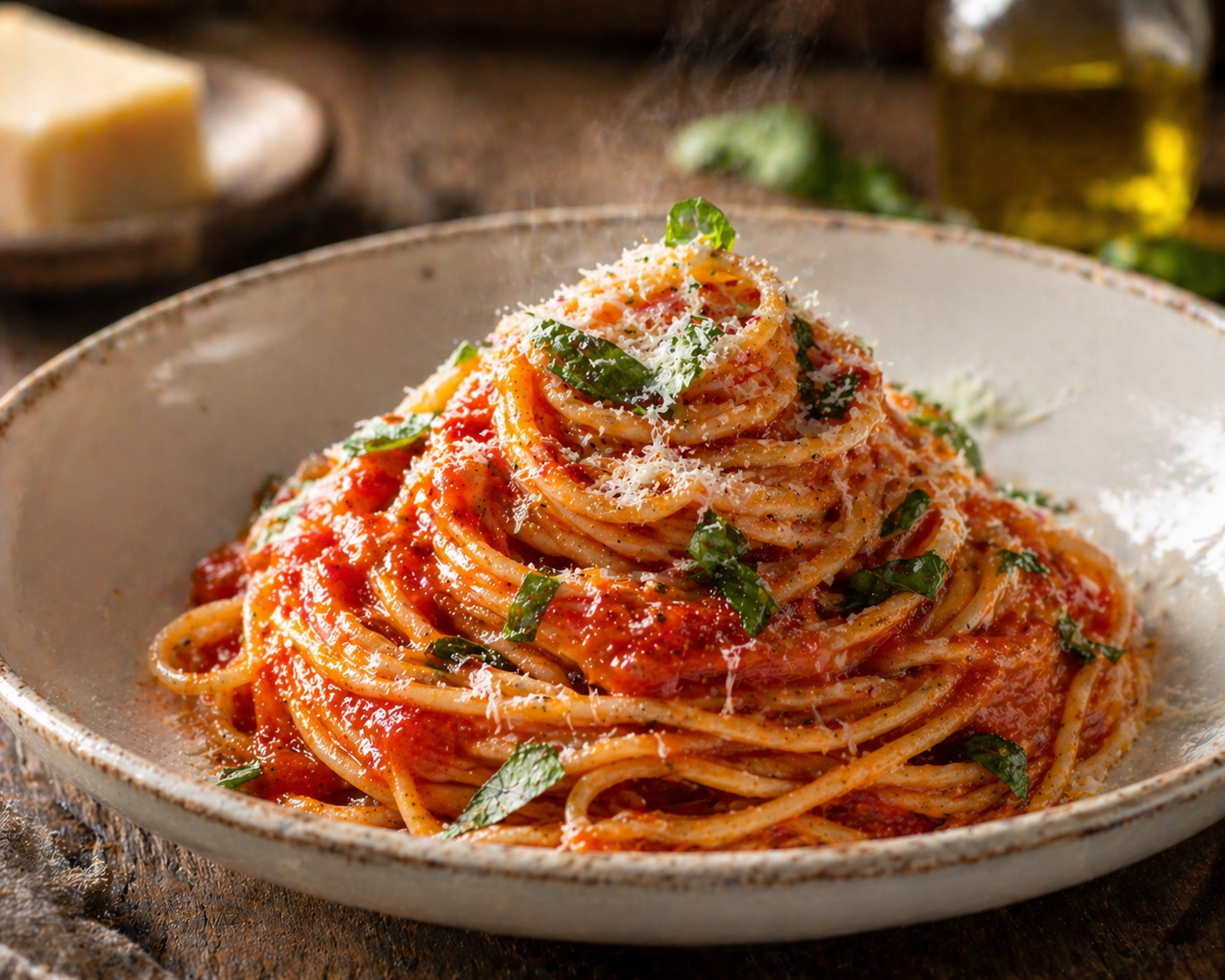
Maybe that is why a bowl of spaghetti al pomodoro still feels so alive to me. It carries history, but it never feels dusty. It feels immediate. It feels like olive oil warming in a pan, garlic going fragrant before it dares to brown, tomatoes breaking down into something glossy and deep, and basil hitting the heat at the very end like a green little exhale. Britannica notes that pasta shapes were developed with specific qualities in mind, including how they hold sauces, and I think spaghetti is one of the best examples of that quiet design. It does not trap sauce in pockets the way ridged shapes do, but it wears a silky tomato sauce beautifully when the sauce is made properly and finished in the pan. That gentle coating is part of the romance for me. It is not chunky or heavy. It is intimate.
And the mood it creates in the kitchen? That might be my favorite part of all. This is the dish I make when I want the room to soften a little. When I want dinner to feel generous without feeling complicated. When I want a meal that is both pantry-friendly and genuinely soulful. Off-season, I do not chase bland fresh tomatoes that promise more than they can deliver; I would much rather open a can of whole peeled tomatoes or use passata, both of which respected recipe sources point to as more reliable for sauce, especially when fresh tomatoes are lackluster. That choice has saved so many weeknight dinners for me, and it has made my spaghetti taste more honest, not less. A pot of sauce, a bundle of pasta, a torn handful of basil, and suddenly the whole kitchen feels like somebody is taking care of you.
Why This Recipe Works
The pasta keeps its bite
When I can find it, I buy bronze-cut spaghetti. That is one of my quiet little grocery-store victories. Barilla explains that bronze dies create a rougher, more porous surface, and that texture genuinely helps sauce cling instead of sliding away. On top of that, dried spaghetti made from durum wheat semolina has the protein and gluten structure that gives it that springy, satisfying chew. In other words, the pasta itself is doing part of the work before you even start cooking.
The tomatoes stay bright and honest
For this sauce, I reach for whole peeled tomatoes instead of diced. Serious Eats notes that whole peeled tomatoes break down more easily and give you better control over texture, while diced tomatoes are often treated with calcium chloride so they hold their shape, which makes them less willing to melt into a silky sauce. That one detail makes a real difference in the pan. If I want an extra layer of depth, I add a spoonful of tomato paste, because it brings concentrated tomato flavor and a little umami backbone without stealing the spotlight.
The final toss does the real magic
This is my real secret: I never stop at “the pasta is cooked.” The best part happens in the last minute or two, when the spaghetti finishes in the sauce with a splash of starchy pasta water. Serious Eats explains that the starch in that water helps the sauce emulsify with the fat, turn creamy instead of greasy, and cling to the noodles more beautifully. It is also why I keep the garlic gentle and patient. If it burns, the oil turns harsh, and the whole sauce takes on that bitter edge you cannot really hide afterward.
Ingredients
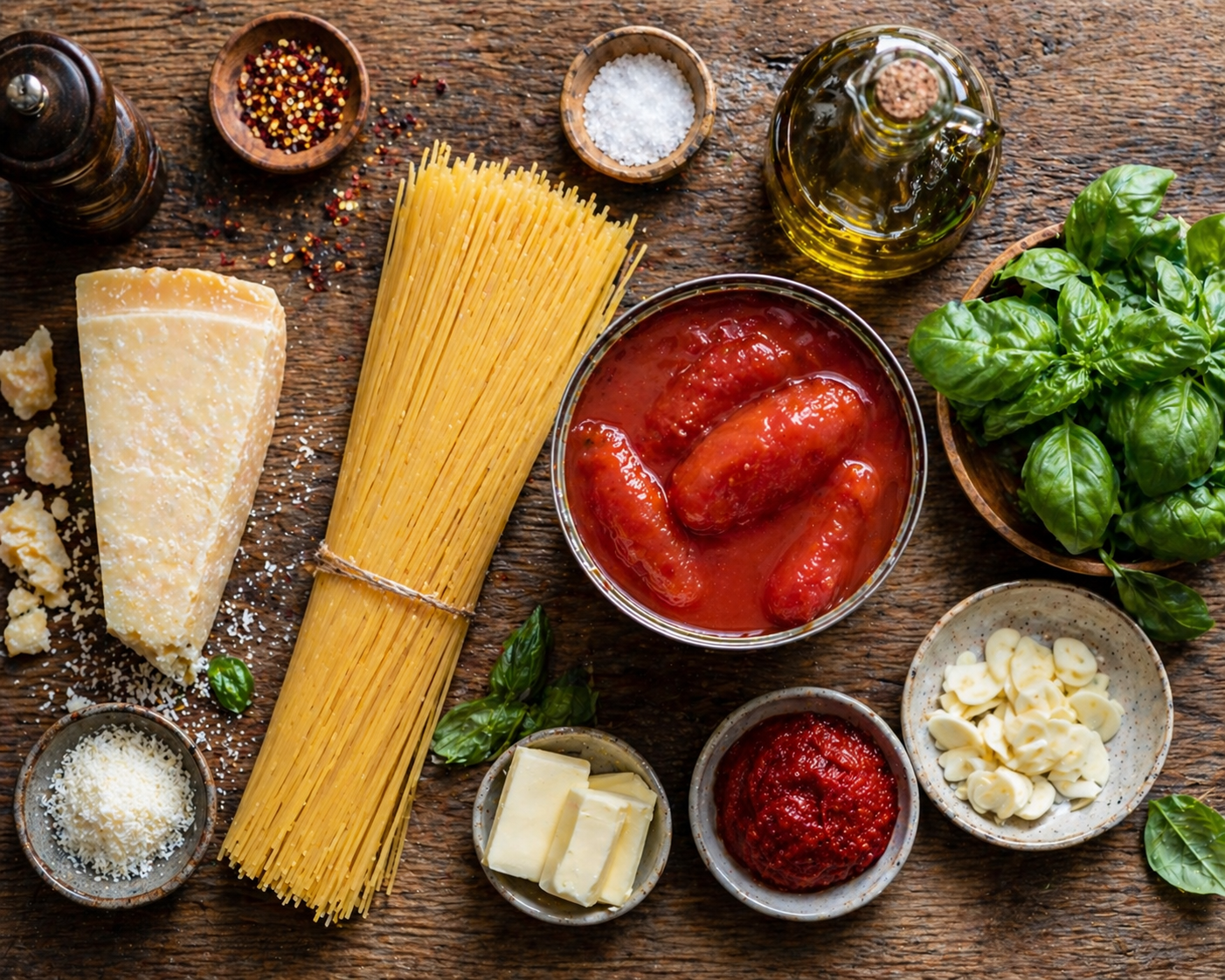
I keep this ingredient list short on purpose. If you can, choose bronze-cut spaghetti and whole peeled tomatoes packed simply in juice; those two decisions give you better sauce grip and better texture right from the start.
- 14 ounces dried spaghetti — preferably bronze-cut, for a rougher surface that grabs sauce
- 3 tablespoons extra-virgin olive oil — use one with real flavor, not a flat, anonymous one
- 4 garlic cloves, thinly sliced — sliced cooks more gently than minced and is easier to control
- 1 can whole peeled tomatoes, 28 ounces — crush them by hand for the best rustic texture
- 1 tablespoon tomato paste — optional, but lovely when you want a deeper tomato note
- 1 teaspoon kosher salt — plus more for the pasta water
- 1/4 teaspoon red pepper flakes — optional, for a soft background warmth
- 1 small handful fresh basil leaves — torn just before using, not chopped ahead
- 2 tablespoons cold unsalted butter — optional, my favorite trick for a glossy finish
- 1/2 cup finely grated Parmigiano-Reggiano — plus more for serving
- Freshly ground black pepper — just a few turns at the end
The Method
Start with the sauce
I begin with a wide skillet rather than a deep pot, because I want the sauce to reduce with a little confidence. Set it over medium-low heat and add the olive oil, sliced garlic, and red pepper flakes if you are using them. Let the garlic turn fragrant and just barely golden. Not brown. Never brown. Watch out for how quickly garlic can tip from sweet and mellow to sharp and bitter; if the slices start coloring too fast, lower the heat immediately. Stir in the tomato paste for about 30 seconds if you are using it, then pour in the crushed tomatoes and the teaspoon of salt. Let everything simmer gently for about 20 to 25 minutes, stirring now and then, until the sauce tastes fuller and looks slightly thickened but still loose enough to welcome pasta. Tear in a few basil leaves toward the end so they perfume the sauce instead of disappearing into it. This gentle garlic-first approach echoes classic Italian methods, and finishing the tomatoes at a calm simmer gives them time to sweeten and settle.
Boil the spaghetti like you mean it
While the sauce simmers, bring a large pot of water to a boil and salt it well. Add the spaghetti and stir during the first minute so the strands separate properly. Cook it until it is just shy of done, usually about 1 to 2 minutes less than the package suggests. You are aiming for that firm, resilient bite that Italians call al dente, because the pasta will keep cooking in the sauce. Before draining, scoop out at least 1 1/2 cups of the pasta water. I always save more than I think I need because almost every good pasta sauce gets better with one last splash. Watch out for overcooking here; limp spaghetti never really recovers, no matter how beautiful the sauce is.
Finish everything in one pan
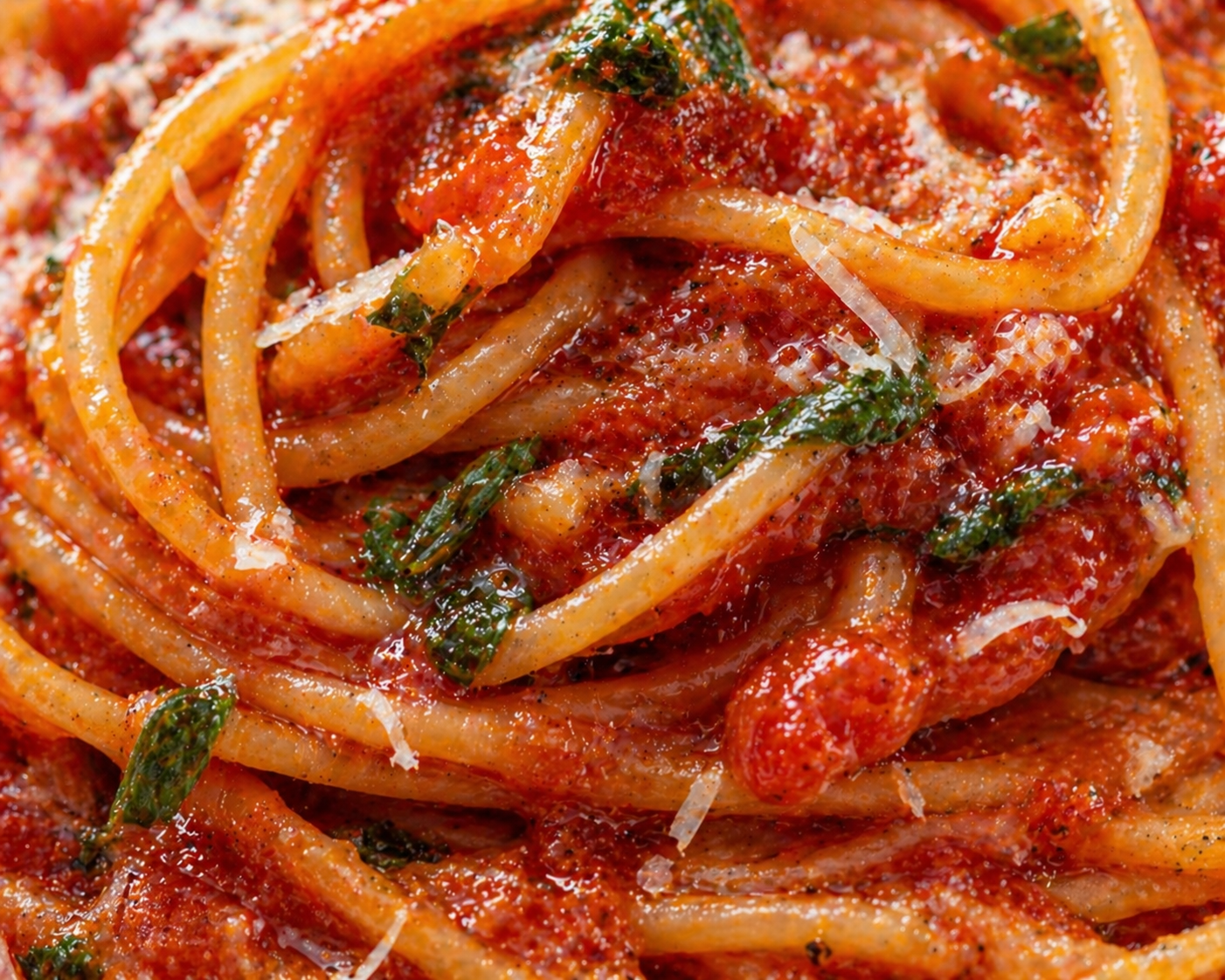
Now comes the part I love most. Transfer the spaghetti straight into the skillet of sauce and add about 1/2 cup of the pasta water. Toss and stir over medium to medium-high heat until the sauce turns glossy and starts coating every strand instead of pooling underneath it. Add more pasta water a splash at a time if the pan looks tight. When the noodles are exactly where you want them, turn off the heat and stir in the butter if you are using it, followed by most of the Parmesan and the rest of the basil. The butter is optional, but I adore what it does here: it rounds the edges and gives the sauce a little shine. Finish with black pepper and taste for salt. Watch out for a dry pan or a thick, pasty sauce. If either happens, you almost always need another spoonful of pasta water, not more oil. The starch is what pulls the whole dish together.
The Flavor Profile
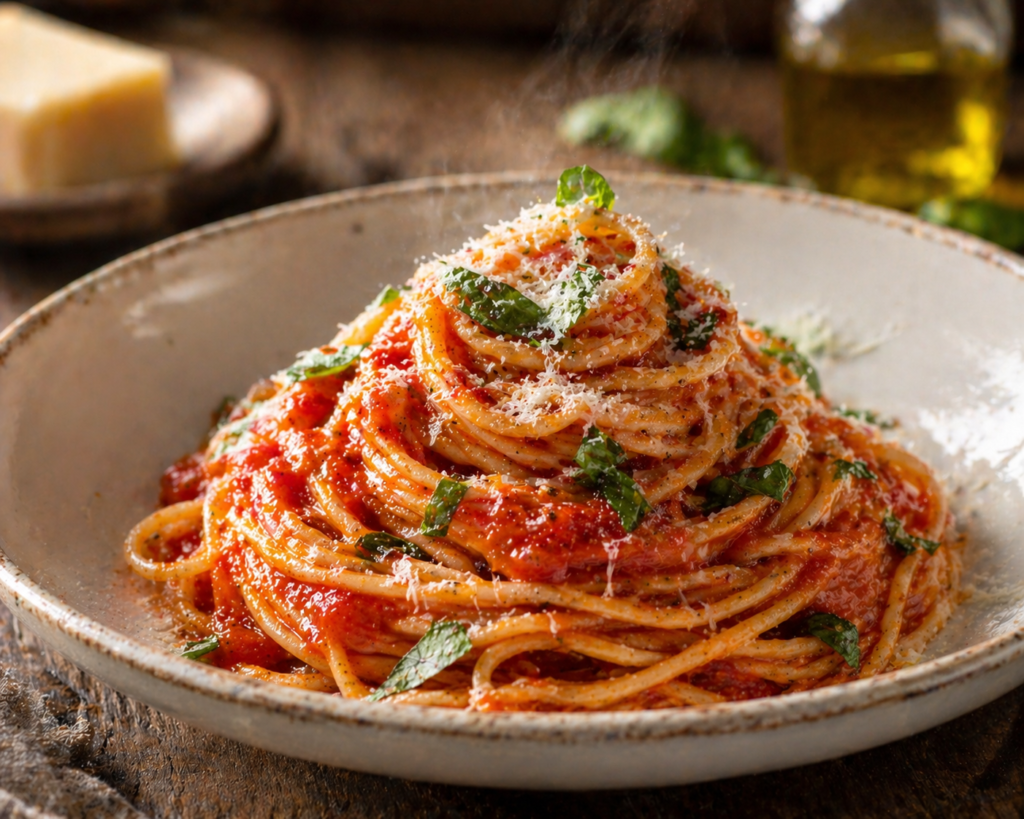
This spaghetti should taste bright first, then warm, then quietly rich. The tomato is the star, but not in a sharp, tinny way. It should have a gentle sweetness from simmering, a lively edge of acidity, and that almost jammy depth that comes when tomatoes and olive oil get to know each other properly. The garlic should feel like a glow around the sauce, not a punch in the face. The basil should arrive at the very end like fresh green perfume. The Parmesan brings salt and nuttiness, and if you use the butter, the whole thing lands with a silky, rounded finish that makes the sauce feel deeper than its ingredient list would suggest. Most important, the spaghetti itself should still have that slight chew, that little bit of resistance, because that is what keeps every forkful exciting.
Variations & Storage
When I want to nudge this in a softer, sweeter direction, I simmer half an onion in the sauce and fish it out before serving. If I want a little more fire, I bump up the chile or spoon in a touch of Calabrian chili paste. Sometimes I melt an anchovy fillet into the oil with the garlic for a deeper savory base that does not scream “fishy” at all. And in peak summer, when tomatoes are actually worth bragging about, I switch to peeled fresh ripe tomatoes in the spirit of classic pomodoro recipes like Barilla’s fresh-tomato version. The rest of the year, I am perfectly happy with canned whole tomatoes or passata, because less-processed canned tomatoes and passata tend to deliver brighter, more dependable flavor than sad off-season fresh tomatoes.
For storage, I prefer to keep leftover sauce separate from leftover pasta when I can, because the texture stays nicer that way. GialloZafferano says a tomato sauce like this keeps about 2 to 3 days in the refrigerator and can be frozen, while USDA guidance says cooked leftovers generally keep 3 to 4 days in the fridge and about 3 to 4 months in the freezer for best quality. If the pasta is already mixed with the sauce, reheat it gently in a skillet with a splash of water until it loosens and turns glossy again. It will never be quite as perfect as the first bowl, but it can still be deeply, deeply good.
Final Note
This is the kind of spaghetti I make when I want dinner to feel like a deep breath. Nothing flashy, nothing fussy, just a bowl with real heart in it. If you make it on a tired weeknight, let it remind you that comfort does not need a hundred ingredients. If you make it on a slow Sunday, let the sauce take its time and let the smell fill every corner of the house. That is half the pleasure for me. And if you end up standing at the stove, twirling a secret forkful straight from the pan before anyone else gets to the table, trust me, I will understand.